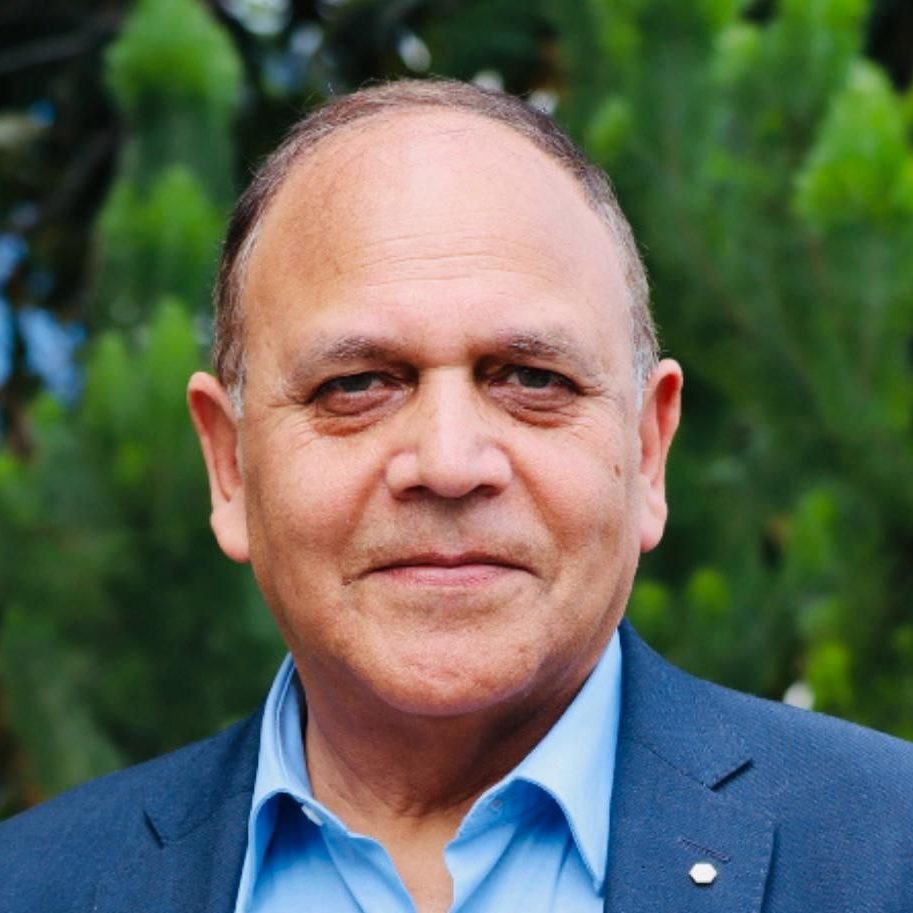
INDIA tested him severely, sometimes ruthlessly, for nearly three decades. He has been tested in all respects of life, as a human in flesh and blood – physically, mentally and spiritually – and as a peoples’ leader in terms of his personal values, ethics and morality. His every bit of strength, compassion for common people, passion to serve his country, and a firm commitment to uphold the Constitution of India and live the Gandhian spirit have brutally been tested over years and challenged by his powerful opponents every step of the way of his arduous life journey. However, with his steely resolve, he did not give up, even when he was thought to be down and out.
As a Herculean feat, he walked on foot for thousands of miles across the length and the breadth of India; he heard the cries and prayers of common people, and he saw first-hand how they lived and suffered silently, godless! He understood why and how the modern India systemically let down tens of millions of poor Indians, including nearly 800 million Indians (about 55-percent of India’s population) who barely survive on the government dole of 5 kgs of rice per person per month for over a decade now, without any hope or promise of regaining the human dignity of self-sustenance.
After completing his tertiary education, despite his strong passion and commitment, India did not initially take him seriously enough when he entered politics, and he was taken for granted. Doctored videos were distributed on social media to denigrate him and obliterate his dignity and political career. He had to do the hard yards and prove his worth, resolve and mental strength at overcoming every kind of hurdle erected in his path by his powerful opponents who wanted him obscured and forgotten into history. He crossed numerous hurdles with flying colours, much to the disappointment of his opponents. The more they tried suppressing him, the more he rebound with greater strength and resolve.
For a trivial and laughable matter, even his Membership of Indian Parliament was once taken away from him by deceit, and he was forced to undergo the harassment and embarrassment of vacating his official residence. But he stood unmoved.
India saw him mourning as a young child when his illustrious grandmother, Mrs Indira Gandhi, was assassinated in 1984. Seven years later, in 1991, India again saw him severely grief-stricken as a young boy when his noble father, Mr Rajiv Gandhi, was assassinated.
There is nothing more that he needs to prove now to be taken seriously enough as a matured and responsible leader of the nation. He is none other than Mr Rahul Gandhi, the current Leader of Opposition in the Parliament of India, the voice of the youth, and emerging choice of peoples as the preferred leader of India. He has emerged as the voice of the poor and the unprivileged.
Once again, it seems India is ready for a Gandhi to lead it.
Mr Rahul Gandhi is the man that India may have been waiting for. At long last, the man has arrived. He comes across a genuine person, sincere and bold to answer any question (extempore) from anyone – people, press, or academics. He is educated. He looks genuine, young and fit. He is proven to walk long distances and listen to the common people; committed do the hard yards for his country; and ready to lead this young nation to a progressive future. He is India’s hope, a gift to her people.
Coming of age
Rahul Gandhi’s (interactive) extempore speech on the ‘Hara Bara Swaraj’ theme at the Rajiv Gandhi Foundation event, on 20 August 2026, illustrates the gift of clarity in thought and vision that he is bestowed with. His exceptional understanding of India, its history and the peoples, the needs of current youth and the demands of the future of India must be making Mother India very proud of him. Arguably, he comes across as an outstanding statesmanlike leader not only in India but on a global stage. India will undoubtedly be in very capable hands with him in the front.
Pune saw another successful youth event for Mr Gandhi. What he is trying to do is quite significant, a gamechanger for the Indian youth, particularly, the significant half of India, the Indian women. Being the Leader of Opposition (Shadow PM), and a prospective prime minister, his groundwork is significant.
With such exemplary amiability and the ease of interaction, with naturally gifted interpersonal skills, Mr Gandhi is raising the growing issue of everyday suffering and struggles of the youth, recognizing the issues they face daily, and committing himself to addressing them. His two-way leadership looks refreshing and revolutionary.
Not only he is giving voice to the disillusioned youth, he is also infusing them with much-needed confidence and hope for a better future, keeping their aspirations and dreams alive.
India at the crossroads
India celebrated its 80th Independence Day anniversary yesterday. As per its Constitution, India’s people are committed to India being a ‘sovereign, socialist, secular, democratic republic’. It is time the people of India review and assess if and to what extent, India at present is truly ‘sovereign’, ‘socialist’, ‘secular’ and ‘democratic’. Most importantly, the people of India must assess the trend lines for each of these four parameters, that is, are these parameters improving with time or falling?
In simple words, (a) what is the current level of India’s sovereignty (independence) in terms of its domestic and foreign affairs and international trade, especially in view of the US tariffs and threats; (b) why is the current India treading a path of capitalism benefiting mainly the wealthy and the powerful, and not a socialistic path for the benefit of its 95% population; (c) in view of a the current ruling party’s vision for a Hindu nation, does India still claim to follow a ‘secular’ path; and (d) are its parameters related to democracy, freedom of press, freedom of expression and protest, and the much required autonomy of the vital institutions improving or deteriorating with time?
In any supposed democracy, when the press and media become the mouthpieces of the government, or are deliberately biased or discriminatory based on religion, or lose the core objectivity of keeping the government of the day under constant check and scrutiny, it is no longer a democracy, but a functional autocracy. Corrupted press and media become complicit (and culpable) in the regime’s mishandling the affairs of the nation.
In any ‘free’ democracy, ‘independent’ press is vital and meant to be the ‘eyes and ears’ of the ‘people’ (the nation), and ‘serve’ as a vital pillar (institution) of the democracy, dedicated to keep the ‘power’ (government) under check; report to the ‘people’ (not the government); and ensure the requisite ‘separation of powers’ between the Executive, the Legislative, the Judiciary, the Election Commission; and the law enforcement occurs.
Criticism is prohibited
The introduction of a bizarre political terminology in India, Dimagi Naxal — to disrespect, disregard and denigrate the (intellectual) critics and opponents — makes one wonder if or how many Indians really understand the meaning of the term, ‘Naxal’, which historically comes from a small village, Naxalbari, in West Bengal (India) where a (poor) peasant movement, in 1967, is known to have risen and stood against systemic oppression by local wealthy landlords.
Based on its history, the terms Dimagi Naxal, which literally mean Mental Naxals (or educated / intellectual critics) don’t really denigrate as much as they may sound derogatory or are intended to. No wonder, therefore, after the birth of the Cockroach Janata Party, the Indian educated youth have given birth to a new party, Dimagi Naxal Janta Party.
In simple language, the current Indian regime hates being criticised by the educated people. This claim can be substantiated by (a) a phenomenal number of government schools closed during the last decade or so; and (b) the examination-paper leak scandal thriving on a systemic corrupt practices over the last several years, which forced scores of young aspirants tragically take their own lives in protest, and millions of students missing out on any chance, whatsoever, to move ahead on the path of education. No wonder, India reports mindboggling unemployment figures amongst the tertiary educated youth.
With the manufacturing sector gone overseas and the public sector taken over and devoured by known crony capitalists, the Indian youth face a grim future unless thing changes sooner than later.
Which direction should India take?
Finally, we arrive at this important question.
As is happening, should India continue to regress to a more autocratic (quasi-monarchy) religious capitalism, as aspired by just about one-fifth of its population that owns more than 80-perecnt of its internal wealth, or should India progress to a more democratic, inclusive, socialist system that (a) infuses and inculcates autonomy and honesty in vital institutions, to revive democracy; (b) recreates a transparent education system, to secure the hope, confidence, dreams and the future of its youth; (c) revives public sector and gives impetus to local manufacturing, to achieve a reasonable degree of self-sufficiency in consumables and good, and generate much-needed employment for the struggling youth; and (d) brushes shoulders with the progressive world, with greater sovereignty, confidence and dignity, as aspired by at least 80-perecent of its population?
Once we decide between the aspirations of upper 1/5th (wealthier) population and the lower 4/5th (poorer) population, the choice of the future leadership in India becomes very straightforward. Logically, India would like to progress with Mr Gandhi at the helm.
With much doubt, therefore, the future of India (the youth) is looking to Rahul Gandhi for his leadership. For making a logical choice between him and his opponents, it is paramount that Indian people first decide the direction that India, a young nation, with youth comprising around 75-perecent of its massive 1.45 billion population, must take.
Bill K Koul, 06 September 2026 (Perth, Western Australia)
Copyright © Bill K Koul