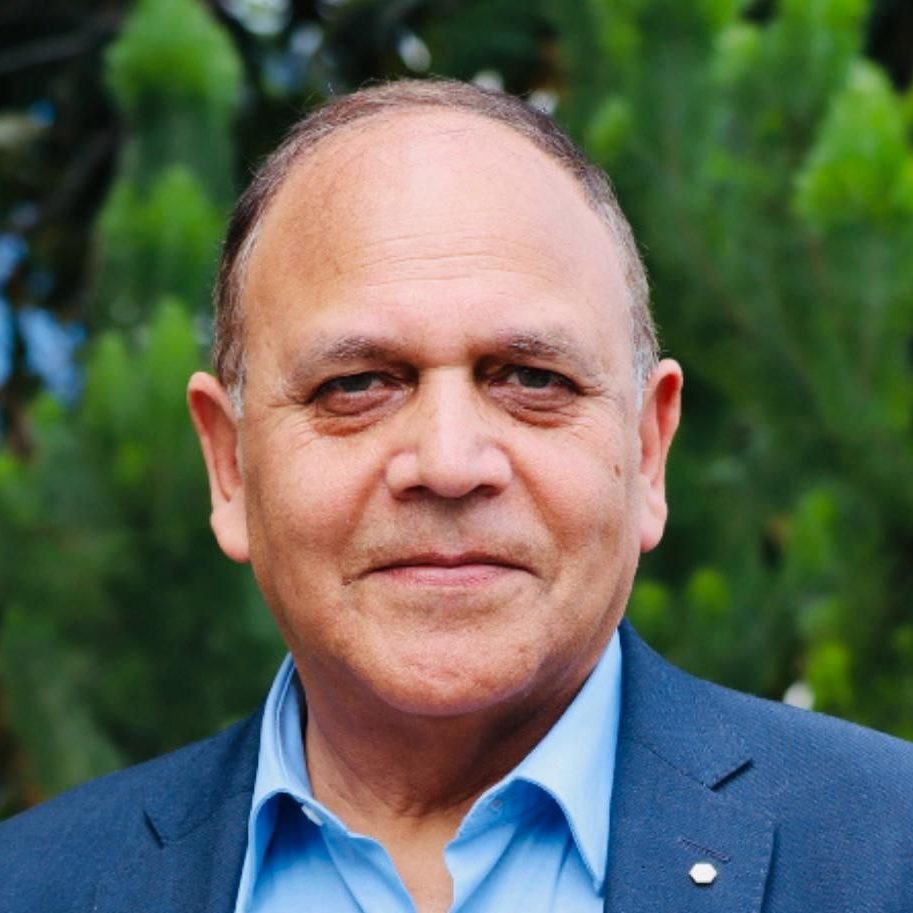
As a responsible person, my posts on social media essentially raise, irrespective of any religious or national bias, the existential issues that the humanity currently faces – as a consequence of (a) suppressive / oppressive behaviours of devious authoritarian regimes; (b) exploitation of human emotions, particularly, of the unsuspecting voters by an essentially deceitful political ecosystem; and (c) serious environmental / ecological degradation of Nature by irresponsible consumerism and materialism, fuelled by crony capitalists and supported by authoritarian regimes.
For strange reasons, however, this piece revolves around me – who, why and what? It is written in response to questions raised by some individual members of my ethnic Kashmiri community who noticeably support India’s religious right-wing. Ostensibly, enraged by my recent posts on social media – asking for transparency in India’s electoral system and independence of its vital institution – I have started attracting a harsh reaction – in the form of explicit hate, slander and revulsion – from a (relatively insignificant) section of the Indian religious right-wingers, who have started discrediting me and my writings, despite not knowing me personally. Some individual comments are abysmally dehumanising, derogatory and deplorable at the very human level. Some individuals allege that I am an Indian Congress Party (‘INC’) mule and dedicated fulltime to discredit the current Indian government. Some even speculate the American philanthropist, George Soros, funds my writings.
Notably, such individuals comprise a very small, virtually insignificant section of the Kashmiri pandit community dispersed across India and the rest of the world. However, being inspired by the life of Lord Ram – the illustrious King of Ayodhya, acknowledged as the 7th avatar of Lord Vishnu – I don’t consider it below my dignity that I respond to them. So, I decided to answer some valid questions.
I must acknowledge that some questions are valid, despite the questions challenging my very individuality, human dignity, freedom of expression and the intention behind my posts. In this piece, in fairness, I endeavour to answer these questions with honesty and not leave them unanswered or make them potentially subject to misleading public speculations. As for the uncivil disparagement by some individuals, my conscience, civility and respect for the innate human dignity do not allow me to stoop to the level of my ignorant critics, it is prudent they are best left alone to their device. One day, they too will be questioned by others or by their own moral conscience.
Why is democracy so paramount for my very essence, my being?
The answer is simple.
I have seen no other system. My voice is important to me, and I don’t like being gagged by authoritarians. I feel suffocated when I see people becoming voiceless when oppressed or suppressed deliberately for no fault, with others turning a blind eye consciously to their human sufferings.
I believe we are alive only till we have a voice, failing which, our existence carries no meaning, whatsoever. Becoming non-existent as humans is better than being reduced to parasitical insects. A voice that is not raised timely for justice and fairness is no voice at all.
I was born in Kashmir in a well-educated family. My grandfather (Pandit Shamboo Nath Koul) was an educationist. As a well-known teacher of high-school mathematics and English, he served the erstwhile state of Jammu and Kashmir (including Ladakh) till his very last (1983). He was a teacher of high calibre. He fortified my mind with rationality and logic.
I grew up in an essentially democratic environment, and primarily inherited my fierce independence, forthrightness (with respect for the human dignity of the other person), and freedom of expression from my late mother, Rani (Jai Kishori Koul).
During my childhood years, my family lived in Srinagar, in downtown Ali Kadal. All our immediate neighbours were Kashmiri Muslims, who comprised about 95% of the entire population in Kashmir. We all lived together, peacefully as civilised communities, intertwined by a common quintessential Kashmiri culture, interwoven with an intrinsic Kashmiri spiritualty and social values.
Despite being a good student, my basic nature hated school in general. I detested dehumanising teachers who used corporal punishment or hurled unnecessary verbal abuses on noncompliant (defiant, dissenting) or deviant students who did not always follow their diktats like dumb slaves. As a result, to detoxify myself, I would take a day off from the school every now and then and quietly stay at home to recover.
Things were generally fine till about 1987. And, then arrived the state election in Jammu and Kashmir that permanently eroded peace in the Kashmir valley and a possibly bright future course of Kashmir. At that time, I was a Master’s student (in engineering) at the University of Roorkee. Based on numerous reports and my personal interviews, the elections were allegedly fudged – massively rigged – as they say. The outcome of the election was mischievously exploited by Pakistan (and Afghanistan) and, arguably, by its powerful geopolitical masters, if one follows the money trail. In the next two years of so, tragically, Kashmir descended fast into a state of uncertainty and anarchy; not many people knowing what was happening. Surviving the chaos became a daily struggle. In fear and panic, one day, in late December 1989, I left Kashmir for an uncertain future. We were uprooted. Most member of the Kashmir Pandit community too left their home on and after 19 January 1990. My parents too left their home in early 1990. Thereafter, my worthy father continued his services in Kashmir, as an engineer, before retiring as a senior government servant towards the end of December 2002. He never made his house again in Kashmir.
Like most other emigrants from India, I too left for work in Malaysia in the early 1990s and finally migrated to Australia. In 2012, I returned home – for just a couple of days – after a gap of 22 years, during which I struggled and worked extremely hard to support my young family and salvage our lost dignity after Kashmir.
Based on my personal sufferings, I can certainly say that there is no better system than democracy but, like water, it needs to be protected for consumption. Any tampering destroys its essence. As such, I deeply abhor religious vilification and bigotry, being a direct victim of a political rebellion in Kashmir in 1989, which unfortunately manifested into a peoples’ uprising based on religion (which it didn’t have to be), supported mischievously and fuelled by Pakistan directly, with implicit and covert support from its powerful geopolitical masters.
In essence, thanks to democracy, I have seen the best years of my life, first, in a pre-1987 Kashmir and, thereafter, here in Australia. I stand of free, liberal democracy, as it is meant to be, and, in principle, against those who actively undermine it overtly or covertly.
Why do I write about India, and not Australia where I live?
I write as an author, and not as a politician, and focus proactively on the preservation of democracy. Being a person of the Indian subcontinental background – with India being home to nearly one-fifth of the humanity (nearly 1.45 billion people) and the largest democracy on earth – India remains at the core of my interest and concern. What happens in India has the potential to affect the entire world, including Australia, as the world is interconnected. India’s wellness and the health of its democracy, therefore, vital for the world.
The essence of India is defined by its spirituality, a resilient free spirit, and an endless pursuit of knowledge. Notably, all its great souls dared to speak out, walk the talk, and work for the benefit of mankind, fearlessly.
From time to time, I also write about American and Australian politics, as well as on human suffering caused by the ongoing wars in West Asia, and between Ukraine and Russia. My published books are testament to my empathy and compassion for the humanity. I am blind to religious bias.
Here in Australia, in relative terms and on a broad scale of human issues, I don’t see major issues as compared to India’s and, unlike some deeply polarising politicians operating in other parts of the world, Australian politicians have not yet crossed the thresholds of decency, personal moral conduct, and political ethics across the political left-right divide. Most importantly, they don’t indulge in personal vilifications. Yes, they do debate hard on the floor of the House on issues related to the country – domestic and foreign, environment and security — and project their views to the people across the nation. Largely, they abide by the Australian Constitution and proactively protect and uphold the integrity, autonomy, and authority of all vital institutions of democracy. Thankfully, Australian voters are informed.
In Australia, notably, voting is held by the traditional paper ballot, leaving no window for rigging, and the election results are declared by the end of the Voting Day.
It is important that India, as a young, 79-year-old democracy, with over 1.45 billion people – most of them comprising youth under 40 years in age – embraces contrasting cultural and ethnical diversity across the nation, as well as an emerging new Global World Order, to progress ahead without must hiccups. India’s politics in the last decade or so has deeply polarised the nation along religious, regional and ethnical lines, despite the nation facing serious challenges in terms of (a) unemployment of the youth – both educated and semi-educated; (b) degradation of ecology and environment; (c) a fragile economy, controlled mostly by crony capitalists; (d) alleged corrupt practices in its institutions; (e) crumbling newly-built infrastructure; (f) delicately positioned border security with none of India’s neighbours happy with it, which must alarm all Indians; and (g) questionable practices of electoral commission and judiciary.
India’s strength lies in its religious and cultural diversity. It can be likened to a beautiful bouquet of flowers of varied sizes, colours and shades and fragrances. Unfortunately, for political dividends, India has been polarised along religious lines.
In essence, the very sustainability of India’s democracy is under pressure, perhaps suffocating and struggling to survive. Amongst several tangible parameters, India has been sliding consistently on the scales of democracy and is categorised as ‘partly free’ in terms of Political Rights and Civil Liberties (62/100) by Freedom House), with a low Press Freedom Index (157th out 180 countries). It has an alarmingly widening gap between the rich and the poor, leaving a precariously struggling middle-class vulnerable to potentially rolling down the socio-economic ladder. For reasons of unaffordability, more than 800 million poor Indians continue to receive a free food dole of 5 kgs of grains per person per month.
Thanks to its crony capitalism, India added more than 30 new billionaires in the past few years, and now stands third in the world, behind the US and China. In terms of GDP per capita, India stays consistently at the bottom of the list of countries (around $2,800).
Capitalism is necessary for a country but only to the extent it can meet the country’s socialist policies on the ground, to lift the poorer sections of the community out of poverty. Money does not grow on trees; it must be generated through meticulous economic policies.
In comparison, Australia GDP per capita consistently stays around $65,000, which is around 23 times than that of India. Furthermore, Australia has a decent mix of capitalistic and socialistic approach to dealing with its socio-economy, which narrows down the rich-poor divide and increases the happiness quotient across the community. Australia’s vibrant social security system, coupled with a virtually free medicare, support to the struggling families in the lower socioeconomic strata as well as to unemployed individuals is only possible when the working class keeps works and pays income tax, whilst the capitalists consistently generate employment.
I am confident that books on political science, democracy and constitutional law will be rewritten around the world, to safeguard democracy and restore peoples’ trust in it, and ensure democracies are not highjacked by a few individuals, and dismantled systemically, setting an otherwise progressive, peace-loving, culturally rich community on an uncertain path of anarchy and irreparable regression.
Bill K Koul [Perth, Western Australia, Australia (4 October 2026)]
© Bill K Koul