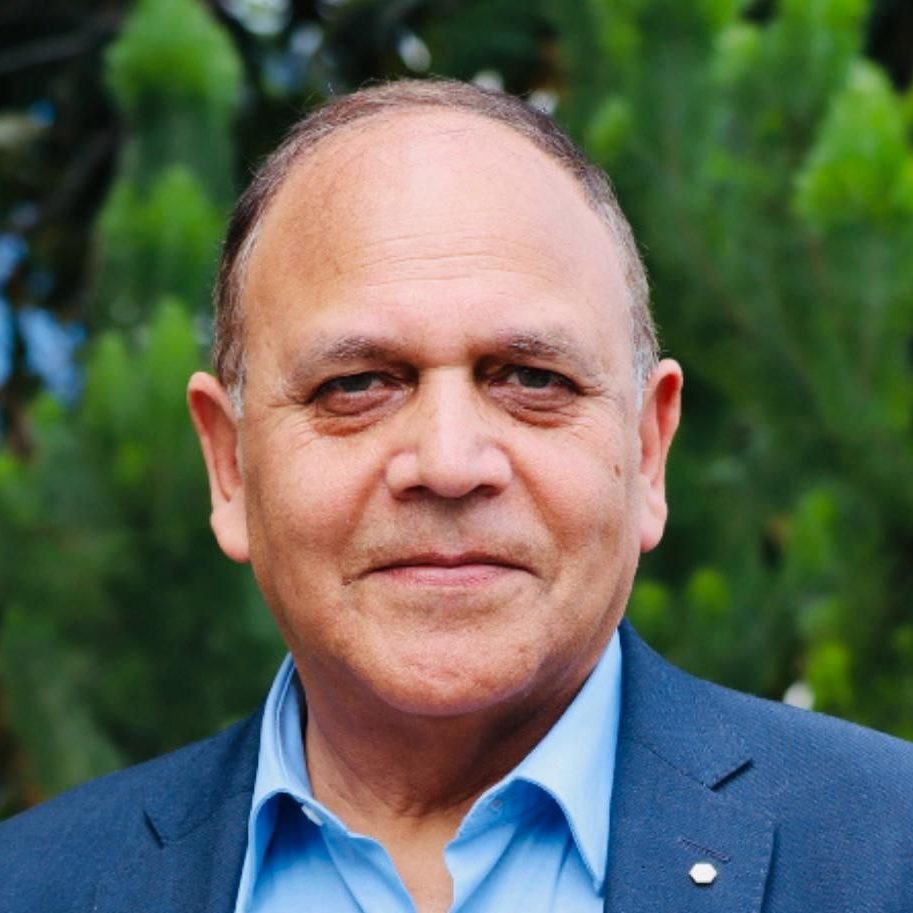
‘Exactly a month ago, I was in Srinagar on a short, 5-day, personal visit. I felt a deep sense of belonging to the valley – my erstwhile home. During my interaction with my Kashmiri Muslim brethren, I was deeply impressed with many young Kashmiri youth, many of them born after the Kashmiri Pandit exodus of 1990. Their deportment, body language, mannerism, conduct, speech and tone were quite friendly and reminiscent of a distant past; their hugs and handshakes felt warm. Obviously, their parents seem to have done a good job with their upbringing.
Unfortunately, a few days ago, the Kashmir valley witnessed violence, yet again, which claimed 20 lives, including 13 suspected militants, three security personnel and four civilians. As usual, the news pained me deeply. What a waste! Every life is previous. My only question is, ‘Why?’ Being a born vaishnav, I have always wondered how humans can kill animals, for consumption or sport, knowing those animals also have feelings and two eyes with which they see their murderer while they get murdered. At the extreme end, killing other humans, for their thoughts and due to one’s differences with their belief sets, is simply unthinkable and unacceptable.
I can’t believe the killed suspected militants could be the likes of the youth that I have just interacted with a month ago. I can’t even believe the killed militants were Kashmiris, considering the foreign interference and involvement. But that is my ‘belief’; it may not be the truth. Can I verify the truth? No, I can’t, because I was not there when the killings happened. Kashmiris say one thing, Pakistan says another thing and India reports another thing, each presenting different perspectives of the same incident, depending upon their belief sets and interests. Which one is believable? The international media have reported the news as they see it (Refer to the two international news reports reproduced at the end of this blog).
There is a video clip making rounds on the social media, which shows a young Pakistani lady, in visible pain and distress, speaking on the recent killings in Kashmir. She has exhorted Pakistani people to come out on streets to protest against Indian ‘terrorism’ in Kashmir. She has also appealed to the Pakistani government to take the issue to the UN and other international bodies, and ‘liberate’ Kashmir from India’s terror. Is she believable? This lady’s cry for justice for Kashmir Muslims is nothing new. Pakistan has been crying for liberation of Kashmir from India and justice for Kashmiri Muslims since its birth seventy years ago; there is nothing new in this.
As noted in my previous blog, India accuses Pakistan of arming and abetting the Kashmiri militancy, in all imaginable ways, which Pakistan denies out-rightly. It only says it gives ‘moral’ support to the Kashmiri struggle against India’s occupation. Pakistan also refuses to accept the evidences produced by India against Pakistan, which don’t leave much doubt about Pakistan’s role in the Mumbai terrorist attack and the more recent Pathankot Airbase attack.
India calls the Kashmir issue its internal matter. Pakistan wants the world community to mediate. Pakistan has spoken numerous times at the UN and other internal forums against India’s occupation and ‘terrorism’ in Kashmir.
Making allegations is not enough; Pakistan must approach the UN and the International Court of Justice (ICJ) with evidence to support its accusations against India, otherwise just shut up. If ICJ has reasons to believe India is the aggressor in Kashmir, it must take action.
Now, let us look at the ground situation. Militancy in Kashmir is limited to a small percentage of people; not every Kashmiri Muslims supports the militancy. People are sick and tired of what they see on a regular basis; they also deserve and want to live a peaceful and progressive life. But, as the Kashmir issue has been hijacked by several internal and external agencies in the last three decades, who have their own vested interests in the continuation of the Kashmir issue, the valley is possibly not going to see peace in a long time, unless such agencies stop exploiting the situation or are made to stop their interference once and for all.
Do all Pakistanis support their country and the militancy in Kashmir? No.
Do all Indians see the Kashmiri militancy as indigenous? No.
Do all Indians support India’s role in Kashmir? No.
To conclude, it is a complex issue. Not everyone can verify the veracity of truth on the ground. There are no black and white answers to the Kashmir issue; it all depends upon the colour of the ‘goggle’ that one wears while looking at the Kashmir issue.
Al Jazeera’s Paul Chaderjian wrote on 2 April 2018: Kashmir violence: At least 20 killed in clashes – Security forces in Indian-administered Kashmir opened fire on villagers trying to stop the arrest of suspected armed separatists. (https://www.aljazeera.com/news/2018/04/kashmir-violence-20-killed-clashes-180402054211213.html). Paul reported: ‘At least 20 civilians, rebels and soldiers have been killed in Indian-administered Kashmir during the deadliest anti-government protests and fighting so far this year. The violence broke out simultaneously in several villages in the Shopian Hill District.’
Time’s Eli Meixler also wrote on 2 April 2018: 20 Dead After a Weekend of Violence in India-Controlled Kashmir (http://time.com/5224341/kashmir-india-pakistan-srinagar/). Some excerpts from Eli’s news clip are as follows:
‘Authorities said 20 people died during clashes in India-administered Kashmir …Three Indian soldiers and 13 suspected militants were killed in a series of clashes near the city of Srinagar, Agence France-Presse reports. Police said hostilities broke out while security forces were conducting anti-militant operations.
Four civilians were also killed when police reportedly opened fire on thousands of demonstrators, some throwing stones and demanding an end to Indian rule … Nuclear-armed India and Pakistan each control parts of the fraught Himalayan region, but both claim it in its entirety. Rebel forces — some wanting independence and others wishing to unite with Pakistan — have been fighting Indian authority since 1989. Last year, a renewed anti-insurgency campaign saw a record 200 militants killed … Fighting has already killed 51 alleged militants this year, according to AFP …’ … Bill K Koul
Exceptional Stuff, granting I would be in possession to assert that given the number of views this has received it may be desirability thinking about trying to sharpen the spelling
and the english! Made a really good read though, excellent matter.
Very nice post. I just stumbled upon your weblog and wished to say that
I’ve really enjoyed browsing your blog posts. After all I’ll be subscribing to your rss feed and I hope you
write again soon!
Feel free to visit my web blog; หวย lottovip
I ran into this page accidentally, surprisingly, this is
a amazing blog :-). The site owner has carried out a superb job of putting it together,
the info here is really insightful. You just secured yourself a guarenteed reader.
Hi, You should take part in a contest for one of the best
blogs on the web. I will recommend this site!